You do not need a complicated portfolio to begin. Start with two questions:
When will I need this money? If its value falls at that time, will an important plan be disrupted?
Money for emergencies, tuition, a housing deposit, or another known payment should prioritize availability and stability. Money for a distant goal such as retirement can accept market fluctuations in pursuit of growth.
The Spending Date Determines the Correct Bucket
Do not classify money only by how comfortable you feel with risk. Consider the practical consequence of a loss before the spending date.
| Purpose | Better starting bucket | Why |
|---|---|---|
| Emergency expenses | Stability | The money may be needed immediately |
| Tuition, housing deposit, or another approaching payment | Stability | The minimum amount and deadline are relatively clear |
| Retirement or another distant, flexible goal | Long-term growth | There is more time to recover from market declines |
| A distant goal with a non-negotiable minimum | Split between both | Protect the required amount and invest the flexible portion |
Korean investor-education guidance similarly recommends identifying the financial goal and the date on which the money will be needed before constructing the portfolio. The important point is not to apply one deadline to everyone, but to prevent near-term money from being exposed to a large loss at the wrong time.
“Stable” Does Not Mean Every Product Is Principal-Protected
Low volatility and deposit insurance are not the same thing.
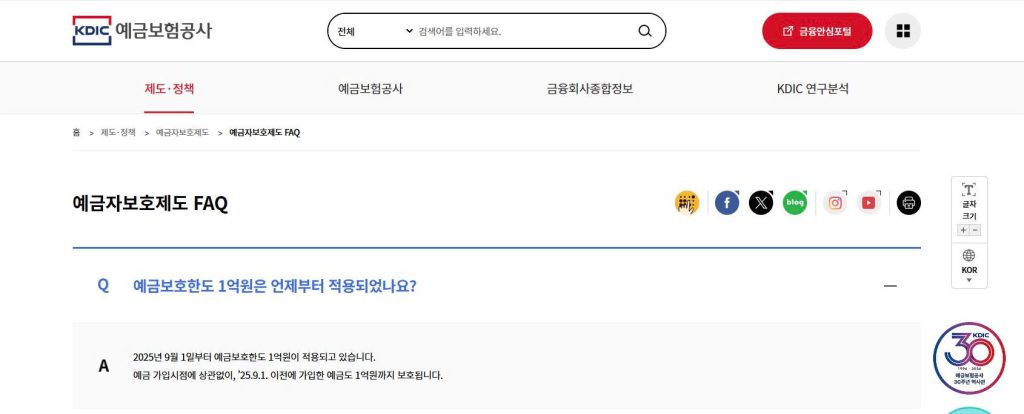
In Korea, eligible deposits have been protected up to KRW 100 million per person, per financial institution, including principal and interest, since September 1, 2025. The limit applies to the total eligible balance at the institution rather than separately to every ordinary account.
RP products, MMFs, and many investment funds are generally outside deposit insurance. An ISA or IRP is an account structure; protection depends on the product held inside it. A deposit held within the account can be treated differently from an ETF or fund.
Before treating money as stable, confirm whether its value fluctuates, whether deposit insurance applies, and whether it can be accessed when required.
Give the Two Buckets Separate Accounts and Jobs
The stability bucket should hold emergencies and known future payments. Naming an account “Emergency Reserve” or “Housing Deposit 2028” makes its purpose clearer than a generic account name.
The growth bucket should remain separate from everyday spending. Avoid connecting it directly to a debit card or routine payment account, so that long-term investments are not withdrawn impulsively.
Two automatic transfers can maintain the boundary. One funds the stability goal until the required balance is reached; the other continues into the long-term investment account.
ISA and IRP accounts do not automatically belong to either bucket. An ISA can hold deposits, funds, ETFs, REITs, and, depending on the type, listed shares. An IRP can also contain different products. The underlying asset and withdrawal conditions matter more than the name of the account or its tax advantages.
Select Products by Their Job, Not Their Advertised Return
Emergency money normally requires immediate access. Money due on a known date can use deposits whose maturities fall before the payment.
Do not select a stability product only because its advertised rate is high. Review early-withdrawal conditions, possible price changes, deposit-insurance status, and how quickly the money can be received.
Long-term growth money can use a diversified combination of stock and bond funds or ETFs. There is no universal allocation that suits everyone. The mix should reflect the remaining time, income stability, and the investor’s ability to remain invested during a decline.
Owning several funds is not necessarily diversification if they hold the same companies or markets. Review the actual exposure by asset type, region, industry, and overlap.
Reduce Risk as the Spending Date Approaches
A long-term goal eventually becomes a short-term one. Its risk level should therefore change over time.
If a housing deposit is still several years away and the purchase date is flexible, part of the money may initially pursue growth. As the payment approaches, the minimum amount that must be available should gradually move into suitable stable holdings.
Make this transition according to the calendar and the remaining funding gap—not a prediction about next month’s market direction. Once a goal is almost funded, protecting the required balance may be more valuable than seeking a small additional return.
Review the plan whenever income, debt, family responsibilities, or the target date changes. Current rates, tax rules, account conditions, and deposit-protection coverage should also be verified before moving money.
Simple rule: Money with a near and important job should prioritize access and stability. Only money with a distant, flexible purpose should accept market volatility for growth.