
Tuning into a live sports fixture, an international exhibition match, or an esports tournament often exposes viewers to vast disparities in broadcast infrastructure. A sports fan might click on an official match stream expecting a crisp, multi-camera 4K feed complete with halftime tactical studio analysis, only to find a single, static camera perched high in the main stand accompanied by a single, heavily biased commentator.
This stark visual and acoustic contrast comes down to the underlying media rights holder and production budget. In-house “Club TV” channels operate as specialized media outlets designed to serve dedicated fanbases with limited regional budgets. Conversely, major broadcast networks—such as Sky Sports, NBC Sports, ESPN, or Canal+ – deploy multi-million dollar mobile production trucks and massive technical crews.
Recognizing the operational markers separating club-produced feeds from network coverage ensures you select the exact viewing experience, camera variety, and production quality you desire before the opening whistle.

Source labels and pre-match broadcast listings
Before a broadcast even begins, streaming portals and official match centers display subtle metadata labels indicating who is managing the transmission.
The most direct indicator is the source logo displayed alongside the fixture time on the video player overlay. In-house streams prominently feature the official club crest, channel branding like “Real Madrid TV” or “Chelsea TV,” or generic tags such as “Official Club Stream.” Major network coverage, by contrast, displays the licensed broadcaster’s logo, featuring labels like “Live on TNT Sports” or “NBC Sports Live.”
Furthermore, when accessing streams via official league portals or sports aggregators, examine the “Coverage Options” dropdown menu. Aggregators categorize feeds into distinct tiers:
- Official Club Channels: Streams produced directly by the home or away team’s media department.
- Licensed Broadcast Partners: Feeds produced by global or regional television networks holding official distribution rights.
Production value comparison: Club feeds vs. network broadcasts
To understand what to expect once you press play, review this comparative breakdown of technical parameters across both broadcast styles:
| Production parameter | In-house club stream (Club TV) | Network broadcaster coverage (NBC/ESPN/Sky) | Viewer experience impact |
| Camera Infrastructure | Single fixed camera or limited 2-camera setup. | Multi-Camera Truck. 10 to 30+ dynamic cameras (spider-cams, pitch-side). | Network coverage provides dynamic close-ups and varied tactical angles. |
| Instant Replay Capabilities | Minimal or non-existent; basic static cuts. | Dedicated Replay Servers. Multi-angle slow-motion replays on demand. | Broadcaster feeds replay controversial referee calls and goals instantly. |
| Commentary Team | Solo “homer” commentator employed by the club. | Neutral 2-person team (Lead commentator + expert co-commentator). | Club streams offer biased, fan-centric commentary; networks offer neutral analysis. |
| Halftime & Post-Match | Static “Thanks for Watching” screens or brief interviews. | Full studio panel, touchscreen tactical breakdowns, and multiple manager interviews. | Network coverage extends engagement with deep pre- and post-match shows. |
Visual signals during the first minutes of play
If you open a stream without checking the pre-match labels, the visual elements displayed during the first sixty seconds of play will immediately reveal the production source.
Camera angle variety and instant replay servers
The most obvious visual signal is camera movement. A club-produced stream typically relies on a single fixed camera positioned on the main grandstand, offering an elevated, static view of the pitch similar to a tactical analysis camera. When a goal is scored, the camera simply zooms in slightly, with few or no slow-motion replays following the action.
Network broadcaster coverage utilizes a massive fleet of cameras linked to dedicated EVS replay servers. During a standard broadcast, the director cuts continuously between wide tactical angles, pitch-side handheld cameras, reverse-angle goal cameras, and ultra-slow-motion tracking shots. Every major foul, shot, or goal is immediately followed by two or three high-definition replays from different visual perspectives.
On-screen scorebars and commentary bias
Examine the scorebar overlay at the top corner of your screen. Club-produced feeds feature simplified, custom-designed scorebars that prominently display the club’s own crest. Network broadcasts feature standardized, high-gloss league graphics packages complete with official sponsor branding and official match clocks.
Audio presentation provides another definitive clue. Club TV commentators are direct employees of the team’s media division; their commentary is unapologetically biased (“homer” commentary), celebrating home team attacks and openly criticizing referee decisions. Network broadcasters employ neutral, professional duo commentary teams trained to maintain objective narrative balance throughout the match.
Post-match content and archive availability
What happens after the final whistle blows reveals the long-term licensing boundaries of the broadcast feed.
Halftime and post-game studio shows
When the referee blows the halftime or full-time whistle on a club-produced stream, the coverage usually concludes abruptly. Viewers are often greeted with a static graphic, club sponsor slides, or a brief tunnel interview with a player before the feed cuts out entirely.
Network coverage transitions seamlessly to a physical or virtual broadcast studio. A panel of veteran pundits and analysts uses interactive touchscreens to dissect tactical formations, review key incidents, and broadcast live, multi-angle interviews from both managers in the post-match press room.
VOD archiving and highlight licensing
Due to strict media rights contracts, major television networks hold exclusive rights to broadcast full-match replays and extended highlights for a specified window (often 24 to 48 hours).
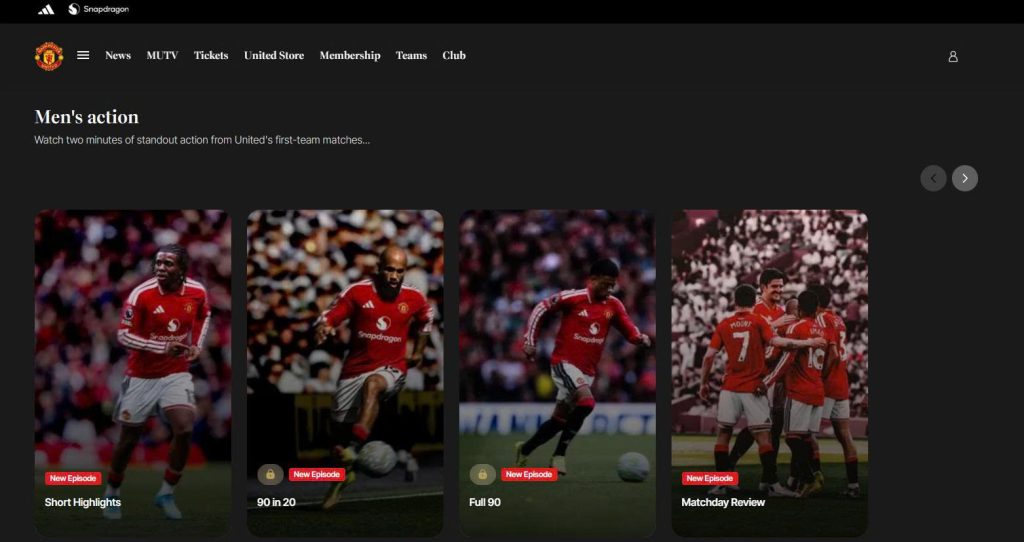
If you are attempting to watch a full VOD replay immediately after a match concludes, network broadcasts are hosted on licensed streaming portals (such as Peacock, Paramount+, or Sky Go). Full replays of club-produced streams are usually archived exclusively within the club’s proprietary subscription app or video-on-demand service (e.g., LFCTV GO or MUTV).
Frequently asked questions about sports stream availability
Why do pre-season friendly matches or academy games only have club-produced streams available?
Major television networks pay for exclusive rights to official, competitive league fixtures. Pre-season friendlies and youth academy matches do not generate sufficient global viewership to justify the high logistical cost of deploying a full television production truck. Consequently, clubs handle their own low-budget in-house coverage for these exhibition games.
Is the video resolution and bitrate inherently lower on club-produced streams?
Not necessarily resolution, but often bitrate and frame rate. While a club stream may output in 1080p, its streaming servers operate under lower bandwidth limits than major network distribution pipelines, resulting in higher motion compression artifacts during fast gameplay compared to a high-bitrate network satellite feed.
Why are club-produced streams often geo-blocked in certain international regions?
International broadcasting rights are sold on a country-by-country basis. Even if a club produces its own internal stream, territorial “blackout” regulations forbid the club from broadcasting the feed into countries where an international TV network holds exclusive distribution rights for that specific match.